
Your Child Doesn't Have a Discipline Problem. They Have a Fear Problem.
Your child isn't lazy. They're afraid. Twenty years of working with high-achieving students — and it's almost always the same fear underneath.
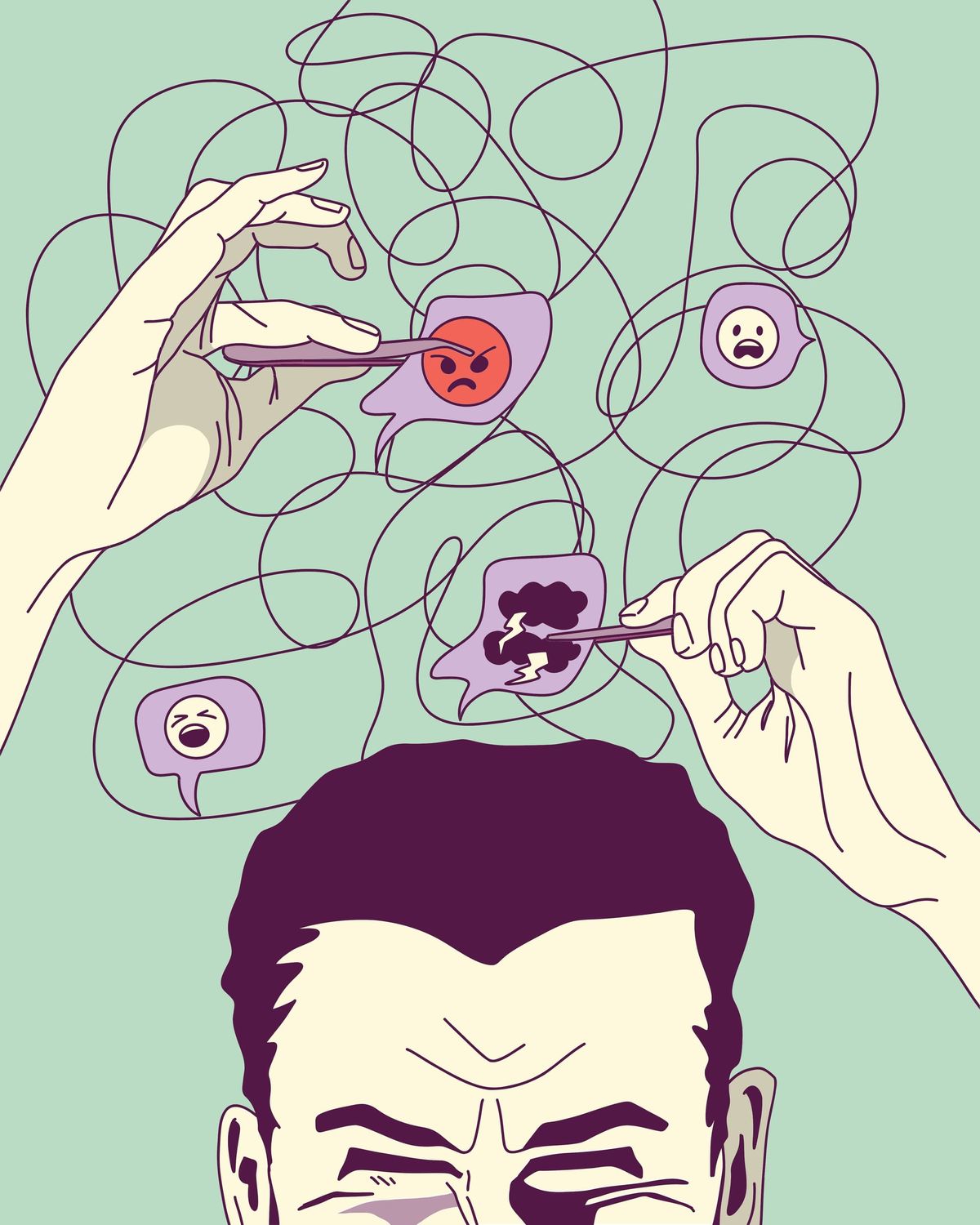
The real psychology of perfectionism — and why the college admissions process is the first time it truly breaks down.
By Mark Lee · Raising Excellence / Founder, IvyZen · 20+ years · 1,000+ students placed at top universities
Raising Excellence is a newsletter for parents of high-achieving students — about the psychology underneath the performance. This is the abbreviated version of this article. The full version — with the complete research, every mechanism in detail, and the practical guidance — is free for subscribers. Subscribe below and read everything.
You have already met Tim.
The 7th grader whose mother called him lazy. Who qualified for USAMO and nearly destroyed his MIT application by never being able to submit anything. Whose mother sat across from me convinced the problem was discipline, while her son sat beside her — a prodigy who was quietly falling apart.
Tim's story is one. But the mechanism inside it repeats itself, in different forms, across hundreds of students I have worked with over twenty years. The names change. The subjects change. The stakes change. The fear underneath does not.
This essay is about that fear.
What Perfectionism Actually Is — And What It Isn't
Most parents, when they hear the word perfectionism, think of high standards. They think of the student who cares deeply, works hard, holds herself to an exacting level of quality. What could possibly be wrong with that?
Everything, as it turned out. But the wrongness is subtle enough that it takes years to see.
Perfectionism is not high standards. It is fear wearing the mask of high standards.
A student with genuinely high standards asks: how can I improve this? The orientation is toward the work. There is implicit confidence underneath — the belief that effort produces improvement, and that improvement is worth pursuing. This student can submit work that isn't perfect because the incompleteness is not a threat to their identity. It is simply the current state of something they are building.
A perfectionist asks something entirely different: what will they think of me if this isn't perfect? The orientation is toward the judgment. There is profound anxiety underneath — the belief that the work is a direct proxy for the self, that imperfect work reveals an imperfect person, that submitting something flawed is not just an academic risk but an existential one.
This is why Tim couldn't finish his AMC problems in time. He knew the answers. The mathematics was not the obstacle. The obstacle was the moment of stopping — the moment of declaring the work done, releasing it, accepting that it would be judged. Every additional check was a way of staying in the protected space where the work was still his, still controllable, still perfectible. The check was never really about quality. It was about safety.
The research literature distinguishes between two forms of perfectionism. Adaptive perfectionism involves high personal standards combined with the ability to tolerate imperfection and learn from mistakes — what high standards actually look like. Maladaptive perfectionism — what Tim had — involves those same high standards combined with excessive concern over mistakes, doubt about one's actions, and a deep fear of negative evaluation. The cruelest irony: it looks like conscientiousness from the outside. The caring is real. But it has curdled into something that works against the very outcomes it is supposed to produce.
How It Develops
Perfectionism does not arrive fully formed. It is built, gradually and usually invisibly, through a specific combination of temperament, environment, and experience.
Some children are constitutionally more sensitive to evaluation, more attuned to others' responses, more prone to internalizing feedback as information about their fundamental worth. This is not a flaw — it is often correlated with intelligence and genuine ability. Tim's sensitivity was part of what made him exceptional. It was also what made him vulnerable.
The environment piece matters more. Perfectionism almost always develops in environments where love or approval feels — even subtly, even unintentionally — conditional on performance. This does not require a harsh parent. It requires only a consistent implicit message: your value here is connected to your achievement. That message can be delivered through praise that focuses exclusively on results. Through visible disappointment at less-than-perfect scores. Through a household where academic performance is discussed constantly and with high emotional stakes.
Perfectionism is then reinforced by early success. The formula works — effort produces excellent results, the A comes, the praise follows, the identity solidifies. And with it solidifies the terror of the moment when that identity is threatened. Because now the stakes of imperfection are not just a bad grade. They are the loss of the self.
Why School Is Kind to Perfectionists — And Why That's the Problem
The school system, up to a certain point, is extraordinarily kind to perfectionists.
Study hard, learn the material, perform on the test, get the grade. The feedback is immediate. The rules are clear. The relationship between input and output is legible. A sufficiently diligent perfectionist can, with enough effort, control the outcome.
For years, sometimes for a decade, the perfectionist lives inside a system that validates their deepest belief. Effort produces protection. Every A is confirmation. The identity calcifies: I am the kind of person who does not fail.
This is not growth. It is learned fragility masquerading as strength. The perfectionist is not building resilience — they are building a very elaborate structure that depends entirely on the formula continuing to work. And the structure has one fatal vulnerability: it cannot survive the first serious encounter with genuine uncertainty.
College admissions is that encounter.
Why College Admissions Makes It Catastrophic
A student can do everything right and still be rejected. There is no guaranteed output for any given input. The system is holistic, opaque, and deeply human. Two students with nearly identical profiles will receive different decisions. The admissions office will not explain why. There is no formula to decode.
For most students, this is uncomfortable but manageable. For the perfectionist, it is psychologically catastrophic.
Everything they have built their identity around — the belief that sufficient effort produces sufficient protection — is suddenly, visibly, and irrefutably wrong. And the mechanism that kicks in is not recalibration. It is escalation. The belief system doesn't update. It intensifies. I just need to be more perfect next time.
Perfectionism under pressure doesn't soften. It accelerates.
The Deeper Truth
Here is something I want to say clearly, because I think it changes the entire conversation about college admissions.
The students I work with do extraordinary things. They write original research papers. They compete in the hardest academic competitions in the world. They develop genuine intellectual interests and pursue them at a level that most adults never reach in their careers. They manage pressure, setback, and sustained uncertainty over years, not weeks.
Think about what we know about athletes who train at the Olympic level and don't make the team. They are not failures. They are, in many ways, the most transformed people in the story. The training produces resilience, discipline, and a capacity for sustained effort under pressure that shapes the rest of their lives. The medal, it turns out, is almost beside the point. The person they became in pursuit of it — that is the real outcome.
This is exactly how I think about elite college admissions.
Every difficult class builds capacity for sustained effort. Every competition — won or lost — builds the ability to put work into the world and survive the judgment. Every rejection letter, navigated with support rather than shame, builds the tolerance for uncertainty that adult life requires constantly.
I have come to believe, after twenty years, that this is the most important thing I can say to a parent watching their child go through a difficult admissions process: the process is not preparation for something more important. The process is the thing. The college acceptance — when it comes — is a byproduct of a student who has been built correctly.
We are not raising students for college. We are raising adults. And adults live in a world of uncertainty, judgment, and outcomes they cannot control.
That is what we are actually building. The college acceptance is a byproduct.
The full version of this article is free — subscribe below and read everything, including the complete research, the practical guidance, and what you can do this week.
Raising Excellence is a newsletter for parents of high-achieving students.
© Raising Excellence · Seoul


Comments ()